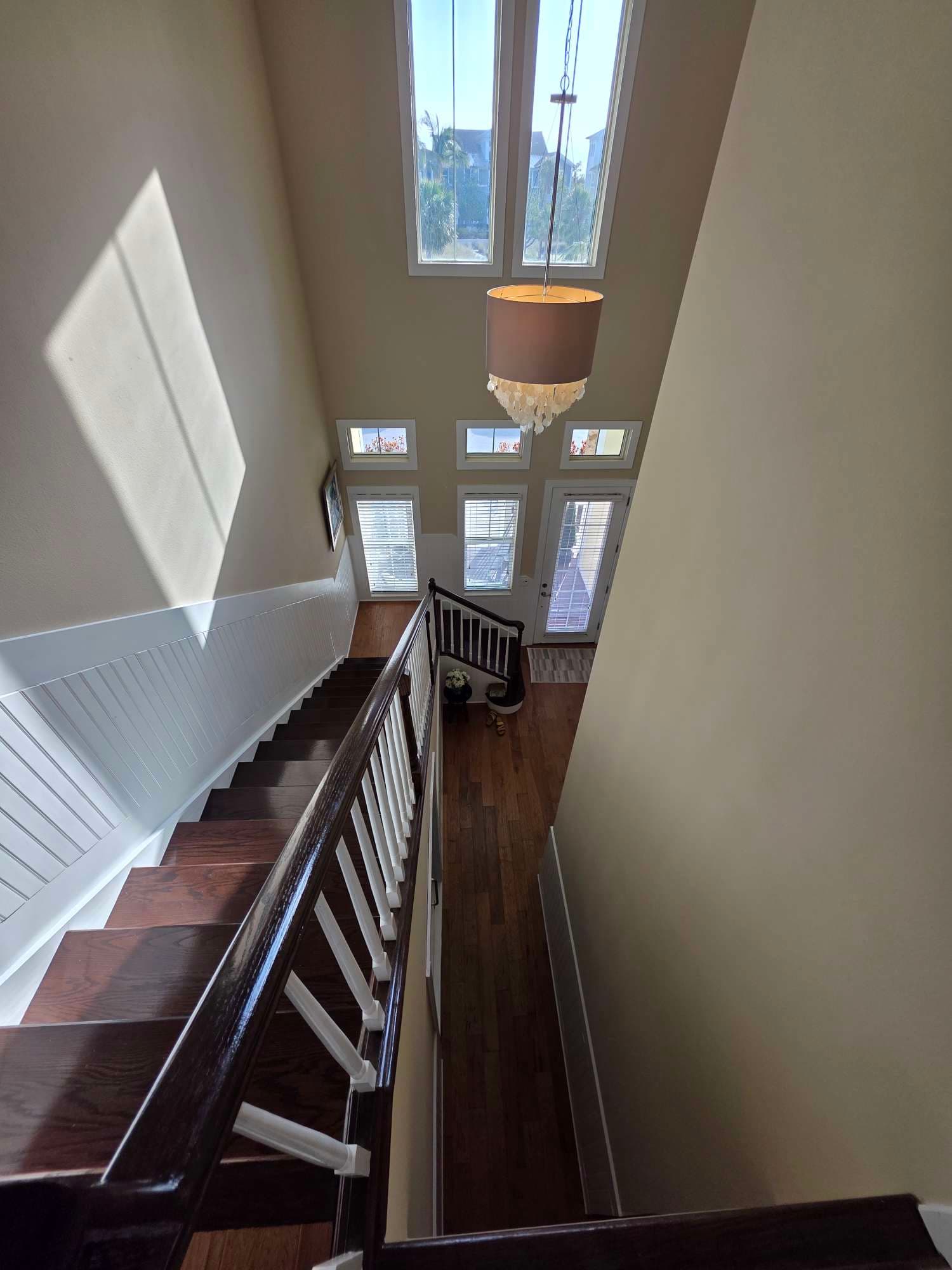
Wood brings warmth to a home, but Florida sun, humidity, and daily use can be hard on stained and clear-coated surfaces. A good result starts with realistic expectations and careful prep.
Stain highlights the surface underneath
Paint can hide some visual variation, but stain usually reveals grain, patching, sanding marks, and previous finish differences. That makes prep especially important.
Clear coating is protection, not just shine
Clear finishes help protect wood while keeping the natural look visible. The right product depends on interior or exterior use, exposure, desired sheen, and maintenance expectations.
Exterior wood needs extra attention
Doors, beams, railings, and exterior wood details can break down quickly when exposed to sun and rain. Those areas need routine inspection and a finish plan that accepts Florida maintenance realities.
Interior wood should support the design
Inside the home, stained wood should coordinate with flooring, cabinetry, wall color, and lighting. The finish should feel intentional rather than disconnected from the rest of the space.
Wood finishes reward patience
The best stain and clear coat results come from controlled prep, sample testing, and choosing a finish that fits the surface and exposure.
Frequently Asked Questions
Why is wood staining more sensitive than painting?+
Stain highlights grain, sanding marks, previous finish differences, and patching, so surface preparation and sample testing are especially important.
Does exterior wood need more maintenance in Florida?+
Yes. Sun, humidity, and rain can break down exterior wood finishes quickly, so doors, beams, railings, and trim should be inspected and maintained regularly.
How do I choose between stain and clear coating?+
The choice depends on the wood condition, desired color, exposure, sheen, and how much natural grain you want visible after the finish is complete.