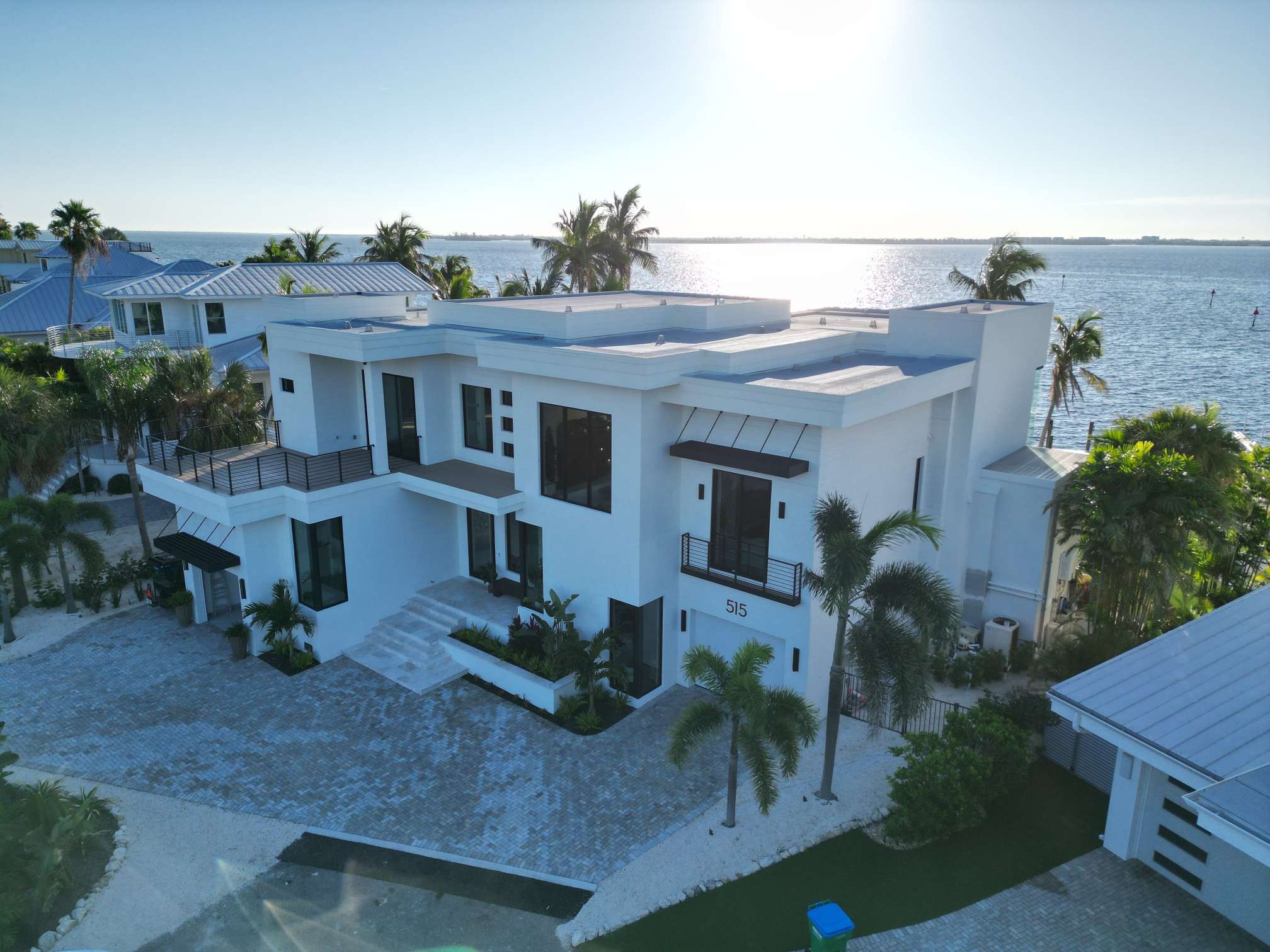
The best coastal exterior paint colors for Florida homes are not chosen from a single swatch in isolation. They have to work with bright sun, roof color, pavers, landscaping, trim, shutters, garage doors, HOA rules, salt air, and the relaxed architecture of places like Anna Maria, Siesta Key, Holmes Beach, Sarasota, and Bradenton.
Coastal color should feel clean and elevated without looking flat, washed out, or too trendy. That usually means building a full palette: a body color, a trim color, and one or two controlled accents. Sherwin-Williams describes coastal palettes as softened shades of traditional seaside colors, and its coastal exterior collections show body, trim, and accent combinations rather than one-color decisions. Benjamin Moore also presents coastal color as a complete design style instead of a single blue or white.
For durability and surface planning in coastal areas, pair this color guide with our coastal home painting guide for Anna Maria and Siesta Key and our exterior painting service overview.
Start with the fixed colors you cannot change
Before choosing paint, look at the roof, stone, pavers, driveway, window frames, gutters, railing, pool cage, and landscaping. These fixed elements control the direction of the palette. A cool gray roof may support soft blue-gray, white, and charcoal accents. A warm tile roof may look better with creamy white, sand, greige, clay, or muted green.
This is where many homeowners make the wrong move. They choose a beautiful color online, then discover it fights the roof or turns harsh in Florida sun. A coastal palette should feel connected to the whole property, not pasted onto it.
Warm whites and off-whites for coastal curb appeal
White is a classic coastal exterior choice, but the wrong white can feel too bright in Florida light. Pure, high-reflective whites may create glare and make trim details disappear. Warm whites, off-whites, and creamy whites often look more natural against tile roofs, palms, pavers, sand-colored stone, and tropical landscaping.
Use white strategically. A warm white body can feel elegant when the trim is slightly cleaner and the front door or shutters add depth. If the body color is sandy or blue-gray, white trim can create the crisp outline coastal homes need.
Sandy neutrals, greige, and taupe
Sandy neutrals are some of the safest coastal exterior colors because they connect the home to beach tones without becoming themed. Greige, taupe, light tan, and soft beige can work on stucco, siding, and masonry when the undertone matches the roof and hardscape.
Sherwin-Williams includes coastal combinations with body colors such as Perfect Greige, Accessible Beige, Macadamia, and other warm neutrals in its Coastal Style Exterior Paint Colors collection. The takeaway is not to copy a palette blindly. The takeaway is to compare body, trim, and accent together.
Blue, blue-gray, and green coastal colors
Blue and green can be beautiful near the water, but saturation matters. A strong tropical blue may look playful on a small accent but overwhelming across a large two-story exterior. Softer blue-gray, muted teal, sage, and sea-glass tones usually age better because they feel coastal without turning the home into a theme.
Benjamin Moore's coastal color palette ideas are useful for thinking in families of color: soft neutrals, watery blues, warm whites, and relaxed accent tones. For Florida exteriors, test these colors outside at different times of day before committing.
A practical coastal palette formula
Body color
Choose the largest color first: warm white, sandy beige, greige, soft gray, blue-gray, or muted sage.
Trim color
Use trim to sharpen the architecture. Off-white, creamy white, or a slightly deeper neutral can frame the home.
Accent color
Keep accents controlled on doors, shutters, railings, or garage details. Navy, bronze, deep green, or muted blue can add depth.
Match the palette to the home style
A waterfront cottage, Mediterranean stucco home, modern coastal build, and HOA community home should not all use the same palette. Cottage homes can handle softer blues and casual accents. Mediterranean homes usually need warmer neutrals and roof-aware trim. Modern coastal homes often look best with cleaner contrast, restrained accents, and fewer color breaks.
If your property is in a planned community, review color rules early. Many HOAs control body colors, trim contrast, garage colors, front door accents, and even sheen expectations. Our HOA painting standards guide explains what to check before painting.
Test colors in real Florida light
Coastal light changes everything. A color can look soft indoors, bright at noon, gray in shade, and warmer near sunset. Test large samples on more than one side of the home, then review them in morning light, full sun, shade, and evening light.
Also test colors near the materials they must coordinate with: roof tile, pavers, stone, garage doors, porch ceilings, shutters, and landscaping. That extra step prevents expensive repainting and helps the final exterior feel intentional.
Final recommendation for Florida coastal colors
The strongest coastal exterior palettes are calm, coordinated, and durable. Choose colors that work with the roof, hardscape, sun exposure, neighborhood standards, and architecture. Then make sure the surface preparation and coating system are strong enough for Florida conditions.
Gold Lion Painting Inc helps homeowners in Anna Maria, Siesta Key, Sarasota, Bradenton, Lakewood Ranch, and surrounding areas plan coastal exterior painting projects with cleaner color direction and a professional finish.
Frequently Asked Questions
What exterior paint colors work best for coastal Florida homes?+
Light neutrals, warm whites, soft grays, sandy beige, muted blue, blue-gray, sage, and controlled navy accents often work well because they suit coastal light and natural surroundings.
Should coastal homes use bright white exterior paint?+
Bright white can look sharp, but in intense Florida sun it may feel harsh. Warm whites and softer off-whites often create a cleaner coastal look with less glare.
How should I choose trim and accent colors?+
Start with the roof, stone, driveway, windows, and landscaping, then choose a trim that frames the home and an accent color that highlights doors, shutters, or architectural details.
Do HOA rules affect coastal exterior paint colors?+
Yes. Many coastal and planned communities require approved palettes or review before repainting, so homeowners should confirm color rules before finalizing body, trim, and accent choices.